Listen: The Orb Weavers
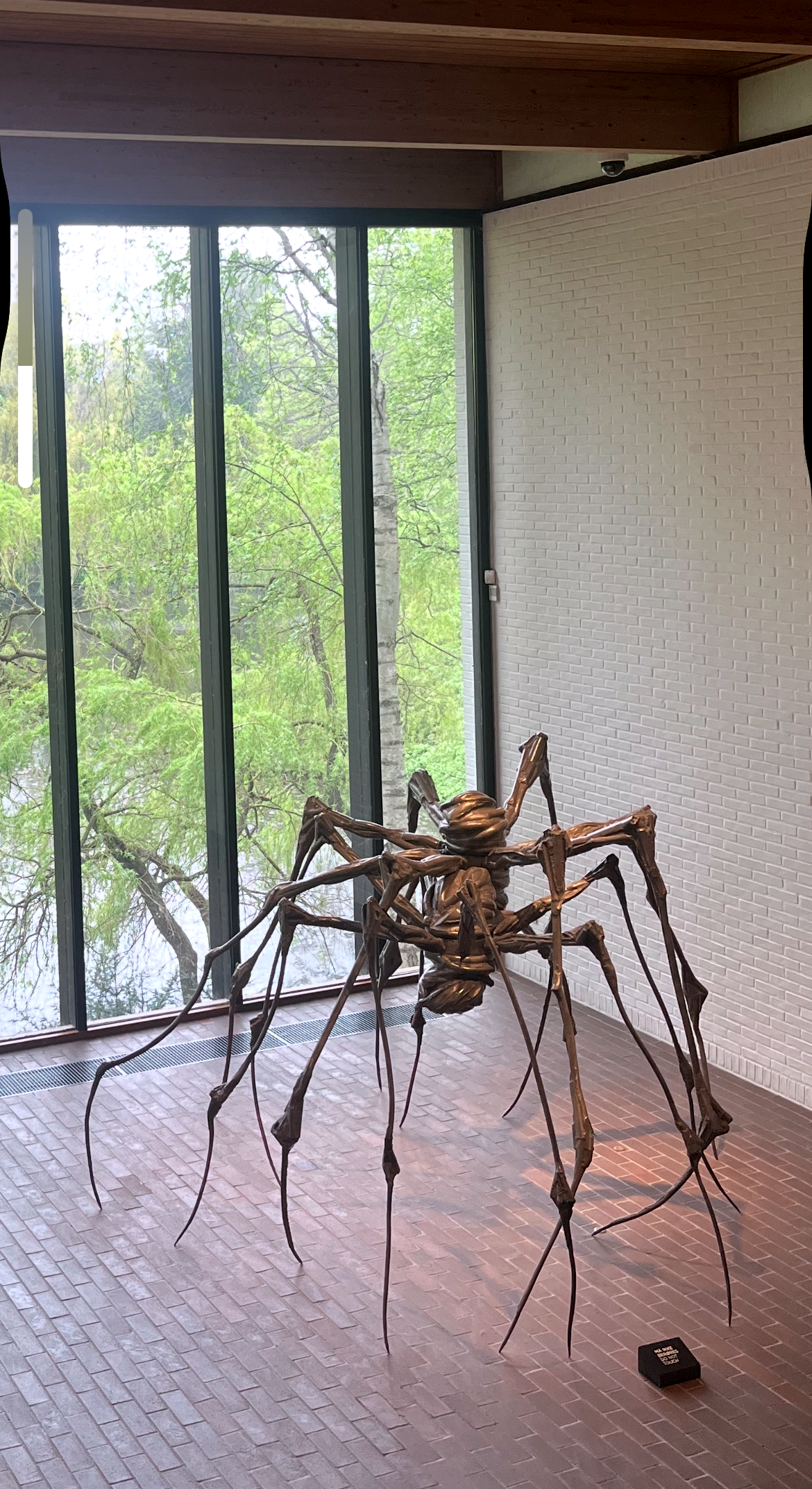
In the split second after a piece of prey flies into a spider web, its reverberations dash through the tapestry of silk. The strands vibrate in a particular patterns of echoes, minute tremors that the spider has learned to read. These web vibrations hold many meanings for the spider, meanings that human researchers are only just starting to understand. By sensing the pulses and tension running through the web, the spider can discern the location of a meal in the erratic movement of its struggle, or the arrival of a mate, its impact like a love song.
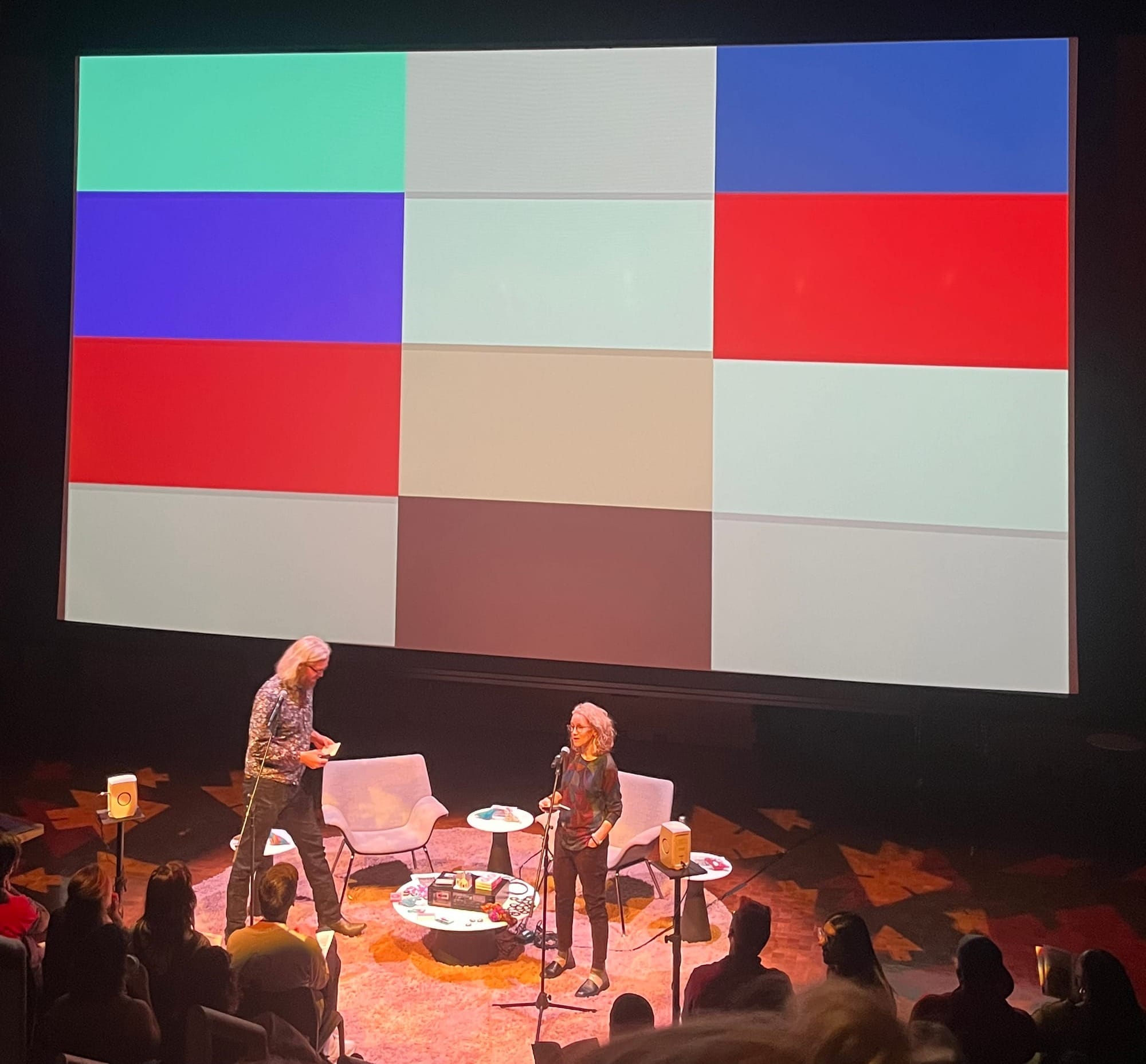
Earlier this fall, I made the above 3 minute piece—with music & sound design by the sublimely talented Hannis Brown—about web vibrations for AudioFlux, a short-form audio project led by inimitable audio champions Julie Shapiro and John DeLore. AudioFlux invites makers to create three minute pieces that push the boundaries of audio while following a certain set of constraints. They commission some pieces, send out an open call for others, and then present selections both live at various radio festivals and on their new AudioFlux podcast.
Each circuit of AudioFlux partners with an artist in a non-audio medium, and this past circuit was in partnership with artist Lorna Hamilton-Brown, known as "the Banksy of knitting" (which...can you imagine anything more badass?).
The prompts for AudioFlux Circuit 06 were as follows:
- respond to the prompt "creative tension"
- involve repetition (to mimic the knitting process)
- assign the piece a color (ours was gossamer, which I later realized is not technically a color, but kind of a evokes a colorless color, and that seemed appropriate).
I had formed a lot of opinions about what makes a good AudioFlux before I ventured to made one. I'd been on the selection and feedback committees for a few previous circuits, and I thought I had a decent sense of the appropriate size topic to bite off under the constraints. Three minutes is, it turns out, a very short amount of time to tell a story. It forces you to be exacting, to be economical, to refrain from trying to stuff a 10 minute story into 3 minutes. I wanted to make something at the right scale, so I decided to make a piece about the existential conflict at the heart of all science storytelling, and perhaps the human-centered fallacy of language itself.
I really just wanted to make a short piece about spiders. I had read an article about the Animal Vibrations Lab at Oxford, where, as part of her dissertation research about a decade ago, Dr. Beth Mortimer had been testing how spiders respond to vibrations by firing bullets at their webs. I had also watched an animated NPR video about how spiders tune their webs like guitars, and I was carried away by the whimsy of it: the little orange cartoon spider scuttling up and down her frets and strings. The guitar metaphor wasn't just in NPR; Science itself (the journal, I mean) covered Dr. Mortimer's initial research and reported that "spiders tune the tension in their webs like a guitar string." My initial idea for the 3 minute piece was to take this guitar metaphor as far as I could, and then make some sort of parallel between spiders seismic senses and how sound reaches human ears. The concept was all a little fuzzy, but I was enamored with the spiders. I figured the rest of the story would come to me in time.
I interviewed Dr. Mortimer, the head of the Animal Vibration Lab, from a hotel room in Dallas, in August, where outside it was north of 105 degrees. I was there attending a corporate podcast conference that was celebrating the encroaching tyranny of AI production tools and the rise of conservative YouTube chat-casts, the polar opposite of AudioFlux. There was a workshop at this conference called: "How to Launch a Podcast Using A.I.— Without Picking Up a Mic or Editing a Single File." I was disgruntled, disoriented, and far too humid.
But little did I know, I was in the perfect place to do an impromptu remote audio interview. I had no sound set up of any sort with me—and no desire to let a robot do the talking—so I sheepishly approached the B&H expo booth. Could I borrow their display USB mic, real quick? And a converter? And some headphones? I gave them a credit card as a collateral object, and to my surprise they let me take off with their gear free of charge. (It worked like a charm, so I can vouch for B&H.)

Dr. Mortimer was a gracious interview guest, and I was impressed by her ability to distill her decade of research on animal vibration into a clear explanation of what is actually happening on the webs. Still, I was so married to my mental image of spiders rocking out on their instrumental webs that I didn't catch a key part of this explanation until I listened back to the tape: namely, that spiders don't use their webs like guitars at all. Guitars use transverse waves—side to side—but spiders are mostly tuning their webs for longitudinal waves, which signify compression or tension along the length of the threads. Ugh! All this science was ruining my short-form sound art!
I had hit a crisis of anthropomorphism. In trying to summon human wonder and sympathy for a creature much maligned and frequently smushed, I had used a clumsy human metaphor, desperate for some point of commonality. If we could only remember that we are animals, and insects are us, and we play music, and spiders play their webs, we could...what, not shudder at spiders? But spiders, with their seismic senses, with their eight legs, with their sexual cannibalism, with their with the seven kinds of goop they pull from their abdomens and weave into tightly constructed interstices of silk and even use as electro-magnetic traveling devices, are not like us. These differences are what make them fear-inducing for some and wondrous for others.
This is, I've found, one of the most difficult and generative challenges in environmental writing: trying use our limited vocabulary to write into the differences between humans and other lifeforms, rather than obscure those differences as a cheap shot at provoking empathy. With the strictures of language, you have to constantly gesture beyond what your distinctly human words can convey, as a spider constructs gaps in between her gossamer strands. When the practice is inherently oxymoronic, your only real choice is to lean into the tension.
I knew I needed someone to help me sit with that distance and with the discomfort of imperfect language. To get all this across in the remaining minute of my piece, I needed a poet. Luckily, the cosmic order of the universe conspired to help me find one. With only a few days left before the AudioFlux deadline, I was walking around my Brooklyn neighborhood, thinking about where I might find a poet to talk to on such short notice. And then, mere moments later, I ran into Rachel Mikita, a lovely neighbor, in the grocery store. I had not seen Rachel for many months, and when I asked her what she had been up to lately, she said she had just started her MFA in poetry, which prompted a flustered response from me along the lines of, "I actually NEED a poet!! Like, right now!! Can I call you tomorrow?" She was a hero to say yes, and I love her poems, which you can read here.
And I really knew the universe was working in my favor when my friend Hannis Brown—who also happens to be a singularly brilliant mind and has sound designed many of my favorite podcasts of all time—offered to compose guitar music for this spider piece. Over the course of a day he brought the entire sonic world of the story to life with music and sound design, and I felt the same kind of awe as when you see a spider deftly pulling silk out of its spinnerets.
"The Orb Weavers" was named an AudioFlux circuit 06 finalist. You can hear all 12 AudioFlux finalists at a live Zoom listening party on December 3rd at 4 p.m., presented by the Association for Independents in Radio.
"The Orb Weavers" will soon be broadcast on the U.K. radio show "I want to eat the earth," a program from my friends at the New School for the Anthropocene, an environmental art and scholarship collective based in London. In this week of celebrating gratitude, I'm thankful to the AudioFlux team for their prompting and for all they are doing to encourage creativity with sound.